Mindfulness: What It Is, How It Works, and How to Practise It
Mindfulness has become a buzzword in recent years. With its growing popularity, many different definitions have emerged. One of them is simply “being here and now.” That captures part of what mindfulness is, but far from all of it.
Mindfulness is a translation of the word sati in Pali, an ancient Indian language spoken at the time of the Buddha. The word mindfulness carries not just one meaning, but several. Perhaps the most important is clear knowing, the ability to observe what is happening without identifying with the experience, without creating stories about why it is happening, without reacting, and without being distracted.
Mindfulness is the ability to meet whatever arises in the mind without resisting the unpleasant or clinging to the pleasant.

What is mindfulness?
In his book Mindfulness, American meditation teacher Joseph Goldstein describes four qualities present in mindfulness. Together, they give us a deeper understanding of the word’s rich meaning.
- Awareness.. This is the quality that helps us bring our attention back to the present moment each time we become distracted.
- Presence. This manifests as the ability to meet whatever we experience without turning our attention away or engaging half-heartedly.
- Remembering. Rather than talking about right or wrong, good or bad, Buddhists use the concepts of skilful and unskilful. What is skilful leads to happiness, peace, love, and harmony. What is unskilful leads to stress, worry, and fear. Mindfulness is the ability to remember what makes us, and everyone else, happy, as well as what prevents us from happiness.
- Clear knowing, Mindfulness reflects as clearly as a mirror. It neither changes, judges, nor evaluates the experience. It adds no stories about what we are experiencing. Mindfulness is simply the bare awareness of what is, exactly as it is. Sometimes we search for something particular and miss what is right in front of us, here and now. Being mindfully present is not difficult, but it takes practice to remember to be.
Your guide to a more present life

The history of mindfulness
Mindfulness, or awake awareness, is at the heart of Buddhist meditation and has been taught since the time of the Buddha, over 2,500 years ago. The meditation technique commonly used today, even in secular contexts, is called Vipassana, meaning “insight.” It is rooted in the oldest Buddhist texts, the Pali Canon, particularly a text called the Satipatthana Sutta.
The global rise of mindfulness
American meditation teachers Joseph Goldstein, Sharon Salzberg, and Jack Kornfield played significant roles in establishing mindfulness and meditation in the West. On February 14, 1976, they founded the retreat centre Insight Meditation Society (IMS) in Barre, Massachusetts.
All three had spent several years practising under various meditation masters in Asia. When they returned to the United States and opened IMS, they deliberately adapted mindfulness practices to work better in a Western context. This included allowing participants to sit on chairs rather than cross-legged in the lotus position, as was common in the East.
MBSR — Mindfulness Based Stress Reduction
It was during a retreat at IMS that Jon Kabat-Zinn had the idea to develop Mindfulness-Based Stress Reduction, often referred to as MBSR. In 1979, he founded a clinic at the University of Massachusetts to treat patients with chronic conditions where medication had not helped. Today, the eight-week programme he developed is widely known, sometimes leading to the misconception that he founded mindfulness itself. Jon Kabat-Zinn is, however, a key contributor to the global establishment of mindfulness, and MBSR remains one of the most widely used secular mindfulness programmes.
The science of mindfulness
Another important organisation in the development of mindfulness is the Mind & Life Institute, founded in 1987 following a meeting between the Dalai Lama, Francisco Varela, a neuroscientist and philosopher from Chile, and Adam Engle, an American lawyer and entrepreneur.
The purpose was to bring together science and contemplative wisdom to better understand the human mind and contribute to positive change in the world. At one of the Institute’s gatherings, the Dalai Lama and several researchers discussed destructive emotional reactions. He asked why they could not research constructive emotional states such as loving-kindness and compassion instead of destructive ones like depression and anxiety. There was already extensive research on diagnoses. Why not use the same methods to explore human strengths?
This question became the starting point for what would become a rapidly growing field of study, the science of meditation and mindfulness.
The difference between mindfulness and meditation
Mindfulness is not the same as meditation. It is the state of mind we cultivate through meditation. An analogy with physical training can help. If meditation is the activity, mindfulness is the fitness we build. In this sense, mindfulness can be seen as our mental fitness.

Learn mindfulness
Mindfulness is present moment awareness without evaluating, categorising, judging, or creating stories about what we experience. This means we do not add any thoughts to the experience. We meet everything with clear knowing, neither trying to hold on to the experience nor avoid it. We allow everything to be exactly as it already is.
Take a couple of minutes to try this mindfulness meditation:
- Take a few deep breaths in through the nose and out through the mouth.
- Then feel the parts of your body that are in contact with the surface beneath you. Feel your weight and let your attention rest here for a moment.
- If you like, close your eyes, but it is not required. Do whatever feels natural to you.
- Then turn your attention inward and notice what is happening inside you right now. Allow everything to be exactly as it already is. Be aware of everything you experience without evaluating it as right or wrong, better or worse, without commenting or criticising. Be a curious witness.
- When you notice you have been distracted by a thought, simply begin again without effort or tension. It is not a failure. It is part of the practice. Be kind to yourself each time it happens.
- Then bring your attention back to the parts of your body in contact with the surface, and open your eyes if they were closed.
You have just practiced mindfulness. It is not particularly difficult, although it may feel unfamiliar. It does not have to take long, and you do not need to sit in any particular way. You can practise anywhere, at any time. You just need to remember to be aware.
Meditation & Yoga
Mindfulness in everyday life
At first, it can feel as though there is a clear distinction between the time spent sitting in meditation and the rest of the day. Meditation can become a break from our hectic lives, where our thoughts lead and our bodies follow. But the goal is to dissolve that imaginary boundary. Mindfulness is not just a state of mind we reach during meditation. The intention is to bring this ability into all of life.
An effective way to cultivate mindfulness is to remind yourself throughout the day. It might be while waiting for the bus, loading the dishwasher, talking with a friend, or drinking your first cup of coffee. Give your full attention to what you are doing, and gently redirect it when you notice you have become distracted.
Insights from mindfulness
With the help of mindfulness, we can begin to explore the relationship between thoughts, emotions, and physical sensations. If you think back to something difficult that happened in your life, you may feel the emotion again as it manifests in the body. If we have a sad or anxious thought, we can feel sad or anxious even though nothing is actually happening right now.
The interplay between thoughts, emotions, and physical sensations largely shapes how we perceive the world. This usually happens unconsciously. Mindfulness helps us become more aware of this process. We can learn to see which emotions come from what is actually happening in reality, and which come from what we are thinking. This is one of the most important skills we can develop for living a happier life.
Between stimulus and response there is a space. In that space is our power to choose our response. In our response lies our growth and our freedom.
– Viktor Frankl
We can also begin to notice a small space between what we experience and how we react. This gives us the opportunity to respond more consciously instead of reacting impulsively. The key moment in meditation is when we realise we have been distracted. That is when we have a choice in how we relate to ourselves and to the world. This was beautifully expressed by a ten-year-old boy who had learned meditation at school. When asked what mindfulness is, he replied, “It is not hitting someone else in the face.”
The science of mindfulness
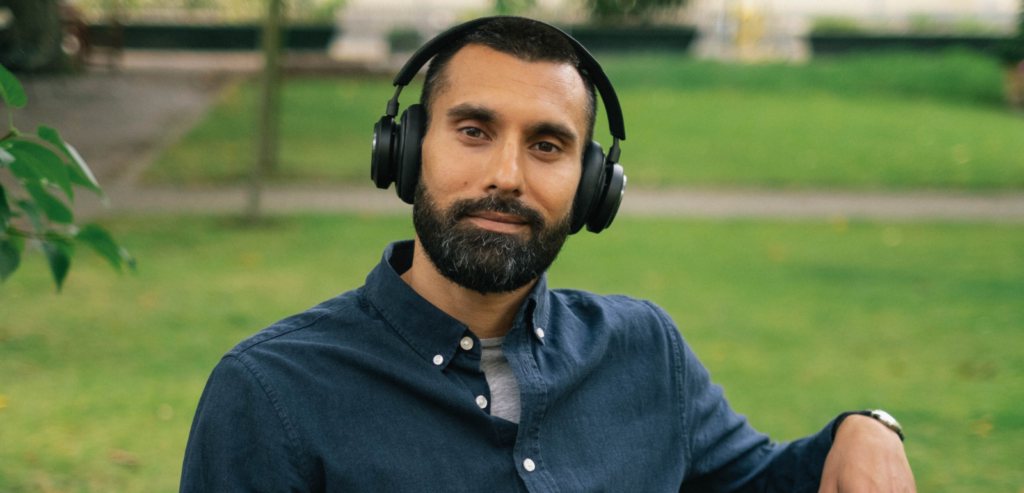
The conventional belief that the brain stops changing when we reach adulthood is not accurate. Neuroscience research shows the brain is constantly changing in response to our experiences. Neuroplasticity – the brain being shaped by repeated experiences – continues from morning to night, an influence we are normally unaware of. In this way, the brain resembles a muscle that grows stronger with training. It also changes when we don’t train it.
The number of studies on meditation and mindfulness has grown enormously with over 20 000 international papers. Mindfulness has several positive effects at an early stage, even for beginners. A widely reported experience among meditators is that mindfulness meditation reduces stress. This has also been observed neurologically, with the brain showing reduced stress reactivity in the amygdala, an area closely linked to stress. After just two weeks of practice, attention improves, including stronger focus, a reduced tendency for the mind to wander, and better working memory.
For those who have meditated for a thousand hours or more, studies have shown that the positive effects become increasingly stable, and new ones emerge. There are indicators both in the brain and hormonally that point to reduced stress activity and reduced inflammation in the body. Increased activity in prefrontal areas has also been observed, indicating a greater ability to handle emotional challenges, meaning one is less easily pulled into difficult emotions and doesn’t stay there as long. Studies have also shown reduced levels of the stress hormone cortisol through meditation, a signal of generally reduced reactivity to stressors. The longer we meditate, the more likely it seems that these temporary states will become lasting traits.
Frequently asked questions about mindfulness
I feel restless when I practise — what should I do?
There are times when we need to release some energy before meditating. Some people practise yoga, others go for a run, and some prefer to dance. But do not let restlessness stop you from meditating. Instead, explore it with mindfulness.
First, acknowledge that you feel restless without resisting it or judging yourself. Then observe the restlessness with curiosity. Where do you feel it in the body? How does it move? Are there any thoughts connected to it?
You can also rate your restlessness on a scale from 1 to 10. This can help you create some distance from the experience. You might also take a few deep breaths through the nose and notice how the body relaxes as you exhale.
If you notice that you are judging your experience, remember that mindfulness is not about what you experience, but how you relate to it. Meet your experience with kindness, curiosity, and acceptance.
What should I do when I feel strong emotions such as fear, grief, or anxiety?
Mindfulness can feel counterintuitive. Instead of distracting ourselves, we open up to what we are feeling. We allow everything to be exactly as it is. This is not always easy, but it is something we can train.
When an intense emotion arises, begin by noticing what it is. You can name it silently. This can help create some distance. Then allow the emotion to be present. This does not mean you have to like it, only that you are not resisting what is already here.
Next, explore the emotion with curiosity. All emotions are felt in the body, so notice where it is located. At the same time, observe any thoughts connected to it. If your attention is pulled into thoughts, gently return it to the body. It can also be helpful to remind yourself that the emotion is something you have, not who you are. The fact that you can observe it shows that you are not the emotion itself.
Be kind to yourself. You might place a hand over your heart or speak to yourself with gentle words. If it becomes overwhelming, it is okay to pause. Shift your attention to something grounding, such as your breath, your hands, your feet, or the sounds around you.
Mindfulness shows us that emotions are like weather. They come and go. Even intense emotions are temporary. The more we practise, the more we can stay present with all our experiences. We all want to feel good, but mindfulness is about becoming good at feeling. Real peace and freedom lie in being able to feel what we actually feel, and allowing ourselves to experience the full range of human emotion.
What should I do when I have lots of thoughts?
Realising that the mind is constantly thinking is one of the most important insights in meditation. Many people believe that thinking means they are failing. In reality, it is the opposite. The practice is to notice that you are thinking. Every time you recognise a thought as a thought, you are practising mindfulness.
Often, we become distracted and start planning or analysing. Sometimes we drift into daydreaming and lose awareness altogether. This is natural. It is the default mode of the mind. The moment you realise you have been distracted, you are present again. Instead of becoming frustrated, meet each moment with curiosity and kindness. Notice what has happened, accept that thoughts are present, and gently return your attention.
One helpful technique is mental noting. When a thought appears, you can label it silently as “thinking.” You can also label the type of thought, such as “future,” “past,” or “judging.” Another useful note is “not now.” This reminds you that the thought may be important, but it does not need your attention in this moment. If the mind feels very active, you can also label it as “overthinking.” Then gently return your attention to the breath or body.
Mindfulness helps us see that thoughts are something we have, not who we are.
Meditation & Yoga
Can I practise mindfulness while doing other things?
Yes, of course. We do not meditate to become better at meditating. We meditate to become better at living. Mindfulness can be applied to all areas of life.
Three simple principles can guide you:
- Set the intention to be present in what you are doing
- Allow things to be exactly as they are
- Gently return your attention when you become distracted
Mindfulness trains our ability to direct attention to what matters most in each moment.
Mindfulness with Mindfully
With the mindfulness app Mindfully, you can learn to meditate and strengthen your mindfulness anytime, anywhere. Mindfully offers a wide library of guided meditations, mindful movement, and teachings grounded in both ancient wisdom and modern science. Whether you are new to mindfulness or have an established practice, Mindfully supports you in living with greater presence and clarity.
Welcome to your inner journey.